CONTENTS: |   Plant, any member of the plant kingdom, comprising about 260,000 known species of mosses, liverworts, ferns, herbaceous and woody plants, bushes, vines, trees, and various other forms that mantle the Earth and are also found in its waters. Plants range in size and complexity from small, nonvascular mosses, which depend on direct contact with surface water, to giant sequoia trees, the largest living organisms, which can draw water and minerals through their vascular systems to elevations of more than 100 m (330 ft). Plant, any member of the plant kingdom, comprising about 260,000 known species of mosses, liverworts, ferns, herbaceous and woody plants, bushes, vines, trees, and various other forms that mantle the Earth and are also found in its waters. Plants range in size and complexity from small, nonvascular mosses, which depend on direct contact with surface water, to giant sequoia trees, the largest living organisms, which can draw water and minerals through their vascular systems to elevations of more than 100 m (330 ft).Only a tiny percentage of plant species are directly used by humans for food, shelter, fiber, and drugs. At the head of the list are rice, wheat, corn, legumes, cotton, conifers, and tobacco, on which whole economies and nations depend. Of even greater importance to humans are the indirect benefits reaped from the entire plant kingdom and its more than 1 billion years of carrying out photosynthesis. Plants have laid down the fossil fuels that provide power for industrial society, and throughout their long history plants have supplied sufficient oxygen to the atmosphere to support the evolution of higher animals. Today the world's biomass is composed overwhelmingly of plants, which not only underpin almost all food webs, but also modify climates and create and hold down soil, making what would otherwise be stony, sandy masses habitable for life. Learn more:: |
PLANTS
Giant Granadilla

Giant Granadilla, strong, rapidly growing vine, member of the passionflower family, native to tropical America. The giant granadilla is grown for its edible fruit, as well as for its ornamental value. The square stems bear rounded leaves and big fragrant flowers that can reach 8 cm (3 in) in width. The flowers are white outside, reddish inside, and have a crown of white and purple filaments. The oblong greenish yellow fruit, which is also called granadilla, grows to about 20 cm (about 8 in) in length and ripens in the summer. The fruit has a brittle rind, and many flat, small seeds are contained within the gelatinous, slightly acid pulp. The green fruit is boiled and served as a vegetable. The pulp of ripe fruit is eaten directly or used in cold drinks.
Scientific classification: The giant granadilla is a member of the family Passifloraceae. It is classified as Passiflora quadrangularis.
Passionflower
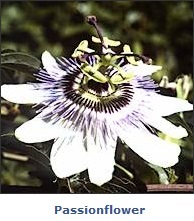 |
| The passionflower, a close relative of the violets, is a woody-stemmed climbing plant that grows to a height of 10 m (30 ft). Passionflowers are cultivated for their unique flowers and edible fruits. |
Passionflower, common name for a flowering plant family, and especially for members of its principal genus. The flowers are usually perfect, generally having a five-parted calyx and five-parted corolla. All species have a more or less conspicuous crown of filaments springing from the throat of the tube formed by the base of the calyx and corolla. The family contains about 530 species, most of which are climbing plants, such as the passion vine of the southern United States, which sometimes reaches a height of 9 m (30 ft). The bell apple, or water lemon, of the West Indies is a species of passionflower with an edible fruit. The giant granadilla is a closely related plant native to Jamaica and South America. The pulp, or aril, surrounding each seed of the giant granadilla plant is used in flavoring drinks and ices.
Scientific classification: Passionflowers make up the family Passifloraceae. The principal genus is Passiflora. The passion vine is classified as Passiflora incarnata, the bell apple, or water lemon, as Passiflora laurifolia, and the giant granadilla as Passiflora quadrangularis.
Indigo Plant

Indigo Plant, common name for any of a genus of shrubs or perennial herbs (see Legume). The genus has about 700 species, most native to tropical regions. Indigo plants have compound leaves and bear purple, pink, or white flowers. Their fruit consists of pods. Various Asian species contain the glycoside indican, which can be oxidized to produce the dyestuff indigo. Of a long-lasting, deep-blue color, indigo was an important Indian, Egyptian, and Roman dye during antiquity. It was first introduced into Europe during the 16th century. Most indigo dye today is synthetically manufactured.
Scientific classification: Indigo plants constitute the genus Indigofera, of the family Papilionoideae.
Foxglove Plant
Foxglove Plant

The common foxglove is grown for decorative and medicinal purposes. The flowers contain glycosides (chemicals that affect heartbeat and pulse), which can be extracted from the leaves and used to regulate and strengthen a person’s heartbeat. However, if plant materials containing glycosides are directly consumed by humans, nausea, abdominal pain, diarrhea, and heartbeat and pulse abnormalities can result. If consumed in large enough quantities, glycosides can cause convulsions and death.
Aconite
Aconite, common name for certain perennial herbs and for a preparation derived from them that was formerly used in medicine. More than 100 species belong to the aconite genus and are native to temperate regions of the northern hemisphere. Several species, including the helmet flower, a well-known European species, are cultivated as garden plants in the United States. The common aconites have fibrous or tuberous roots, mostly erect stems, and palmately divided or cleft leaves. The flowers in most species are blue or purple, although some species have yellow or white flowers. The outer, showy parts of the bilaterally symmetrical flower are five in number, and the uppermost is shaped like a large, downward-opening hood. Because of this hood, which immediately distinguishes aconite from larkspur, aconites are commonly called monkshood. They are also known as wolfsbane.
Aconites contain highly active alkaloids, especially aconitine, and are poisonous to both humans and animals. The helmet flower has long been considered one of the most dangerous plants of Europe. When eaten in small to moderate amounts, roots produce symptoms of restlessness, salivation, nausea, a weakened and irregular heartbeat, chest pain, prostration, and frequently death within hours.
Scientific classification: Aconites belong to the family Ranunculaceae. The helmet flower is classified as Aconitum napellus.
Related Articles: |
| Cultivated as garden plants in the United States, helmet flowers bloom a brilliant indigo blue in late summer. Long considered dangerous in Europe, helmet flowers are poisonous to humans and if eaten may cause nausea, irregular heartbeat, or death. |
IMPORTANCE OF LICHENS
Lichens are common food for insects and slugs. In the arctic tundra, reindeer and caribou rely on lichens during the winter, when no other food is available. Several species of lichens that sprout up through the snow are called reindeer mosses.
Humans rarely eat lichens except in cases where no other food is available. The Bible may chronicle one such example: Some scholars believe that the manna or bread that the ancient Israelites ate in the desert when they fled Egypt was made of lichen. In Japan, where algae as well as fungi are prized foods, certain lichens are eaten as delicacies.
Although lichens have been used in folk medicine as purported cures for many ills, from headaches and toothaches to tuberculosis, diabetes, and asthma, their use in modern medicine is recent. The discovery in the 1940s that some fungi produce potent antibiotics stimulated an extensive screening of fungi and lichens. Since then, lichen extracts have found limited use in Europe, where lichen antibiotics have been used to treat tuberculosis and some skin diseases.
Lichen extracts are also used to add color or scent. Many lichens have earthy red, brown, russet, and blue pigments, and these pigments have been used as clothing dyes since the time of ancient Greece. Native Americans use boiled lichen extracts to dye cloth and baskets. Even the famous Harris tweeds, woolen textiles from the Scottish islands, are still dyed with Scottish lichens. A number of dark, oily extracts from European and African lichens are used to add scents to soaps and perfumes.
Lichens are used as living indicators of environmental problems because of their sensitivity to atmospheric pollution. Despite their hardiness in severe conditions, many lichens are damaged by the chemicals found in polluted air and by acid rain produced from the burning of coal, oil, and gasoline, and other industrial processes. Comparisons of lichen damage from industrialized and nonindustrialized areas provide an index of air pollution. Studies spanning the past 50 years have found that the variety and number of lichens have declined in many industrialized cities in both Europe and North America. Fortunately, studies have shown that when a pollution source is shut down, lichens can make a comeback, providing hope for their long-term survival.
GROWTH AND REPRODUCTION OF LICHENS
Lichens lack roots, but they are usually firmly attached to the surfaces where they grow by hyphae. Lichens grow excruciatingly slowly, adding a few millimeters to their length or diameter in a year. The fastest growing varieties may add no more than 30 mm (1.2 in) to their length in a year. Lichens may have long life spans—a lichen found in West Greenland in the Arctic is more than 4,500 years old. Scientists have used the sizes of large specimens to estimate how long it has been since glaciers covered arctic and mountain areas.
During prolonged dry periods, lichens survive by retaining a small amount of water and reducing their growth and metabolic processes to the barest survival levels. After a rain, the fungal partner is able to soak up water like a sponge, absorbing two to three times its weight in water. A moist internal environment is critical for the alga, which needs water, along with carbon dioxide and sunlight, to manufacture food through photosynthesis. During dry periods when other food may be lacking, the fungus benefits by absorbing sugars and nitrogen-rich compounds produced by the alga during photosynthesis. In some cases the fungal partner is parasitic, using special fungal hyphae called haustoria to penetrate the algal cell and absorb nourishment. Since the fungal partner usually does not kill the alga, some scientists call this relationship a controlled parasitism of the alga by the fungus.
In lichen reproduction, the fungus undergoes sexual reproduction and the alga undergoes asexual reproduction, each independently of its partner. In the fungus, the hyphae contains two mating strains, called plus and minus strains because there are no anatomical distinctions between them. The nuclei from these two mating strains fuse within a special, multicellular reproductive structure on the surface of the lichen. The fused nuclei divide several times and produce spores, which are carried away by the wind and may germinate to form a new mass of hyphae. These new fungal hyphae are free of algae and typically must link with an alga in order to survive. The algal cells within the lichen reproduce through mitosis, a process in which a single cell divides into two genetically identical cells.
Lichens as a unit may also undergo asexual reproduction. The lichen may slough off small clumps of soredia, intertwined fungal hyphae with a few algal cells, which disperse to new habitats. Alternatively, the lichen may produce small, fingerlike buds on the surface called isidia, which break off and form new lichens.
STRUCTURE OF LICHENS
About 18,000 to 20,000 species of lichens have been identified. Scientists typically classify lichens based on the fungal partner, and the lichen name is the same as the scientific name of the fungal partner. By far the most common fungi found in lichens are sac fungi, or ascomycetes, which produce reproductive spores in special cells shaped like sacs. In about two dozen tropical lichens, the fungal component is a club fungus, or basidiomycete. The club fungi, which include common mushrooms and toadstools, produce their reproductive spores in special cells that are shaped like clubs.
The algal partner of a lichen is usually composed of green algae in the form of single cells or chains of cells. Green algae contain chlorophyll, the primary light-absorbing pigment necessary for photosynthesis. This pigment is housed in saclike structures called chloroplasts, the sites of photosynthesis. In some dark-colored, gelatinous lichens, cyanobacteria (also known as blue-green algae) are the algal component. Usually a lichen contains a single species of algae, but in a few cases both a green alga and a cyanobacterium live in different parts of the same lichen.
A typical lichen has a three-layered structure. A middle layer containing algal cells entwined in fungal hyphae is sandwiched between two layers of fungal tissue. This three-layered structure is arranged into one of three basic growth forms. Crustose lichens grow as flattened crusts with the bottom layer cemented to the surface of a rock or tree bark. Foliose lichens have a leaflike appearance, with a distinct upper and lower surface exposed to the air. Foliose lichens often form large, flaky patches on tree trunks. Fruticose lichens grow in hairlike, shrubby strands on the ground or hanging from tree branches. Each strand is tubular, with the typical three-layered structure surrounding a hollow core. A common fruticose lichen is old man’s beard, which hangs in wispy clumps from tree limbs and resembles moss.
Vegetative Reproduction
Vegetative Reproduction, method by which plants reproduce asexually—that is, without the union of cells or nuclei of cells—thus producing individuals that are genetically identical to the parent. Vegetative reproduction takes place either by fragmentation or by special asexual structures. Parts of liverworts and mosses fragment from the parent and grow into new individuals, as do plant cuttings. Asexual structures in plants include specialized stems such as tubers, stolons (runners), rhizomes, and corms, and specialized buds such as bulbs. Roots and leaves can also give rise to new plants. Thus, new individuals generate, for example, from the eyes of potatoes, the cloves of garlic bulbs, and the stolons of strawberry plants. See also Plant; Plant Propagation.
Asexual Propagation: Propagation from Stems and Roots
Some plants produce special underground stems such as tubers, bulbs, and corms that enable them to reproduce asexually. Like all stems, these structures have buds, or nodes, from which new stems branch. Tubers are swollen, fleshy stems with several buds called eyes that produce new plants; an example of a tuber is the potato. Bulbs, such as those found in onions, lilies, hyacinths, and tulips, are short, wide, teardrop-shaped underground stems surrounded by scaly leaves. Corms, such as crocuses and gladioli, are similar, but lack the scaly leaves. Both bulbs and corms make clumps of new bulbs or corms, called offsets, which can be divided and buried in the soil to generate new plants. Irises and ferns produce rhizomes, fleshy stems that grow horizontally beneath the soil, with new plants developing from the tip of the rhizome and from each node on the stem. Stolons, specialized stems found in strawberries and many lawn grasses, are similar to rhizomes but are usually thinner and grow on top of the soil. They also produce new plants at the tip and from the nodes.
Asexual Propagation: Tissue Culture
Also called micropropagation, tissue culture is the production of plants under sterile laboratory conditions. A variety of tissue culture techniques are used to propagate plants. In one method, growers remove a tiny piece of leaf or stem from a plant and place it in a sterile test tube on a gel-like medium enriched with hormones and nutrients. A yellow-brown mass of cells called callus develops from the piece of plant. Small chunks of the callus are separated, and each piece is placed in a petri dish with a hormone and nutrient mix that stimulates the development of the callus pieces into plants. The young plants are removed from the petri dish and placed in pots with soil, or into the ground, where they grow to maturity.
Tissue culture enables researchers and growers to rapidly generate numerous clones year-round in greenhouses. In nature, strawberry plants typically produce their fruits in summer. Commercially grown strawberries, however, are propagated throughout the year by tissue culture, providing consumers with a steady supply of strawberries for every season. Tissue culture is also used to produce plants free of viruses, fungi, and bacteria, and to propagate species such as Douglas fir and rhododendron, which are difficult to grow commercially from cuttings, layering, or grafting.
Asexual Propagation: Agamospermy
In agamospermy, also known as apomixis, a seed develops directly from tissues of the ovule rather than from a fertilized egg. Depending on the species, a fruit may or may not be produced. The plants that develop by agamospermy are clones of the mother plant. Agamospermy occurs in nature in species such as dandelions and blackberries, enabling them to spread rapidly since they can bypass pollination and fertilization.
Asexual Propagation: Grafting
In grafting, a freshly cut section of stem with buds, called a scion, is joined to another plant called the stock. The upper stem of the stock is severed and the scion is joined to the lower stem. The scion is securely attached to the stock, and the tissues of the two plants grow into each other, forming a single plant. The scion produces the stems, leaves, and flowers on the new plant and the stock provides the root system.
Grafting combines desirable qualities from one species, such as disease resistance or the ability to grow in waterlogged soils, with desirable qualities of another, such as the ability to produce high quality fruit. Grafting is often used to make fruit trees more vigorous and productive. Bud grafting is a form of grafting in which a single bud cut from a stem is grafted onto the stock. It can be carried out more rapidly than other forms of grafting and is used widely in the nursery industry to propagate hundreds or thousands of plants in a relatively short amount of time. In nature, roots of oak trees of the same species commonly graft together, hastening the spread of diseases such as oak wilt, a fungal disease that kills a variety of oak trees.
Asexual Propagation: Cuttings and Layering
For many plant species, a leaf, section of stem, or piece of root cut from a plant and lightly covered in soil, peat moss, or another growth medium develops a new, independent plant by generating the missing parts. Stimulated by hormones called auxins, a partially buried leaf or piece of stem, for example, develops roots on the buried portion, and a piece of root forms stems and leaves above the soil. Cuttings and layering are widely used for perennial plants, plants that grow back from the same roots year after year. Commercially, cuttings are the most important source for perennials, such as new fruit trees; conifers, including pine and spruce; a variety of shrubs, roses and honeysuckle, for example; and many florist blooms.
In layering, a new plant develops from a stem that is still attached to the parent plant. In nature, the stem simply arches over and spreads out on the ground. The parts of the stem that are in secure contact with the soil develop the roots, stems, and leaves of a new plant. The flexible stems of trailing blackberries, black raspberries, and several other species spread rapidly in this way.
Growers typically layer species that propagate naturally in this way. Layering is also used for plants such as filberts and Muscadine grapes that cannot be propagated easily by other methods. If plants do not layer naturally, a grower can induce them to layer by pinning the stems to the ground. Growers also layer plants by cutting them to the ground during the winter and covering the new spring shoots with soil, a technique called mound layering. This causes new roots to form along the buried lower portion of the new shoots, and new stems and leaves then grow up through the mound of soil. In a few weeks the new plants are cut away from the parent and planted in a garden or nursery. This technique enables a grower to produce many plants from a single parent that has desired traits. Apple trees, currants, and gooseberries are commonly propagated in this way. In air layering, often used with house plants, stems are partially cut and peat moss or sphagnum moss is wrapped around the wound, which is then covered in plastic wrap. A single plant develops from the place where the stem was cut.
In layering, a new plant develops from a stem that is still attached to the parent plant. In nature, the stem simply arches over and spreads out on the ground. The parts of the stem that are in secure contact with the soil develop the roots, stems, and leaves of a new plant. The flexible stems of trailing blackberries, black raspberries, and several other species spread rapidly in this way.
Growers typically layer species that propagate naturally in this way. Layering is also used for plants such as filberts and Muscadine grapes that cannot be propagated easily by other methods. If plants do not layer naturally, a grower can induce them to layer by pinning the stems to the ground. Growers also layer plants by cutting them to the ground during the winter and covering the new spring shoots with soil, a technique called mound layering. This causes new roots to form along the buried lower portion of the new shoots, and new stems and leaves then grow up through the mound of soil. In a few weeks the new plants are cut away from the parent and planted in a garden or nursery. This technique enables a grower to produce many plants from a single parent that has desired traits. Apple trees, currants, and gooseberries are commonly propagated in this way. In air layering, often used with house plants, stems are partially cut and peat moss or sphagnum moss is wrapped around the wound, which is then covered in plastic wrap. A single plant develops from the place where the stem was cut.
Asexual Propagation
Asexual propagation is the production of new plants from the leaves, stems, or roots of a single parent plant. Asexual propagation, which does not require pollination or fertilization, is a rapid method of propagation. It ensures that all of the parent’s genetic material survives even if the parent dies, and it creates offspring, known as clones, with the same traits as the parent plant. Asexual propagation is advantageous when plants are well adapted to a particular environment. Several methods of asexual propagation occur in nature. They have been adapted for commercial use for rapid propagation and to obtain plants that are hard to grow from seeds.
A. Cuttings and Layering
B. Grafting
C. Agamospermy
D. Tissue Culture
E. Propagation from Stems and Roots
Celery

Celery, common name for a biennial herb of the parsley family, a native of Europe but now widely grown throughout the world. The stalks, about 30 to 76 cm (about 12 to 30 in) high in cultivated varieties, are eaten, raw or cooked, as a vegetable or salad. When allowed to grow naturally, the stalks are greenish in color and slightly bitter in taste. They are often blanched during the last stages of their growth by preventing access of sunlight except to the leaves; this process removes the color and the bitter taste, but also some of the vitamins. If allowed to grow a second year, celery sends up flower stalks about 61 to 91 cm (about 24 to 36 in) tall with small white flowers in umbels. The dried fruit of celery is used as a condiment alone under the name of celery seed or ground and mixed with salt under the name of celery salt. Celery seed is also used in pharmacy as a sedative or to disguise the flavor of other drugs.
Celery is subject to attack by several blights, by the tarnished plant bug, and by the larva of the black swallowtail butterfly. In the United States, celery crops are grown principally in California and Florida.
Scientific classification: Celery belongs to the family Apiaceae
Spinach

Spinach, common name for an annual crop plant, of the goosefoot family, grown for its nutritious and savory leaves. Probably native to southwestern Asia, spinach was introduced to Europe by the 12th century. It became cultivated worldwide and received sudden popularity in the 1920s when nutritionists found it contained iron, vitamin A, and vitamin B2, or riboflavin.
Two varieties of spinach are now grown. Wrinkled, or savoy, spinach can be packaged and shipped without wadding or spoiling and is marketed fresh. Smooth-leaved spinach can be easily washed and is marketed frozen or canned. Spinach leaves are picked from the immature plant when in the form of a rosette close to the ground. Because extended daylight and hot temperature cause the plant to bolt, or draw growth away from the leaves and into a tall, central flower stalk, spinach is best cultivated in cool climates during spring or fall, or in warm climates during winter. Most spinach in the United States is now produced in Texas and California. Spinach is a fast-growing crop, producing harvestable leaves about 40 days after seeding.
Scientific classification: Spinach belongs to the family Chenopodiaceae. It is classified as Spinacia oleracea.
Orach

Orach, common name for a tall annual plant of the goosefoot family, native to Asia. Orach is also called garden orach and mountain spinach. It is cultivated in Europe and North America both as a foodstuff and as an ornamental. Orach grows to a height of 2 m (7 ft). Its furrowed stems bear soft, arrow-shaped leaves and small flowers in crowded clusters. The young shoots and leaves are eaten like spinach.
Scientific classification: Orach is a member of the family Chenopodiaceae. It is classified as Atriplex hortensis.
Endive

Endive, also escarole, common name for a plant (see Composite Flowers) having a curly, lettucelike head, with inner leaves that are used in salads. The inner leaves of the plant are sometimes blanched by enclosing the head of the endive in its outer leaves (which normally fall away) or by covering the entire plant with a special tube of paper. The long blanched shoot of chicory is called Belgian or French endive, or witloof.
Scientific classification: Endive belongs to the family Asteraceae
Subscribe to:
Posts (Atom)
Popular Posts
-
 Plant Cell Plant cells contain a variety of membrane-bound structures called organelles. These include a nucleus that carries genetic...
 -
 All flowers share several basic features. Sepals, protective coverings that are closed over the bud before it blooms, are the outermost flow...
 -
Archaea or Archaebacteria, common name for a group of one-celled organisms, many of which do not require oxygen or sunlight to live. Before ...
-
Algae, diverse group of simple, plantlike organisms. Like plants, most algae use the energy of sunlight to make their own food, a proces...
-
 Insectivorous Plants, also carnivorous plants, plants that gain some of their nutrition from animals, especially insects, captured by the pl...
