CONTENTS: |   Plant, any member of the plant kingdom, comprising about 260,000 known species of mosses, liverworts, ferns, herbaceous and woody plants, bushes, vines, trees, and various other forms that mantle the Earth and are also found in its waters. Plants range in size and complexity from small, nonvascular mosses, which depend on direct contact with surface water, to giant sequoia trees, the largest living organisms, which can draw water and minerals through their vascular systems to elevations of more than 100 m (330 ft). Plant, any member of the plant kingdom, comprising about 260,000 known species of mosses, liverworts, ferns, herbaceous and woody plants, bushes, vines, trees, and various other forms that mantle the Earth and are also found in its waters. Plants range in size and complexity from small, nonvascular mosses, which depend on direct contact with surface water, to giant sequoia trees, the largest living organisms, which can draw water and minerals through their vascular systems to elevations of more than 100 m (330 ft).Only a tiny percentage of plant species are directly used by humans for food, shelter, fiber, and drugs. At the head of the list are rice, wheat, corn, legumes, cotton, conifers, and tobacco, on which whole economies and nations depend. Of even greater importance to humans are the indirect benefits reaped from the entire plant kingdom and its more than 1 billion years of carrying out photosynthesis. Plants have laid down the fossil fuels that provide power for industrial society, and throughout their long history plants have supplied sufficient oxygen to the atmosphere to support the evolution of higher animals. Today the world's biomass is composed overwhelmingly of plants, which not only underpin almost all food webs, but also modify climates and create and hold down soil, making what would otherwise be stony, sandy masses habitable for life. Learn more:: |
PLANTS
Giant Granadilla

Giant Granadilla, strong, rapidly growing vine, member of the passionflower family, native to tropical America. The giant granadilla is grown for its edible fruit, as well as for its ornamental value. The square stems bear rounded leaves and big fragrant flowers that can reach 8 cm (3 in) in width. The flowers are white outside, reddish inside, and have a crown of white and purple filaments. The oblong greenish yellow fruit, which is also called granadilla, grows to about 20 cm (about 8 in) in length and ripens in the summer. The fruit has a brittle rind, and many flat, small seeds are contained within the gelatinous, slightly acid pulp. The green fruit is boiled and served as a vegetable. The pulp of ripe fruit is eaten directly or used in cold drinks.
Scientific classification: The giant granadilla is a member of the family Passifloraceae. It is classified as Passiflora quadrangularis.
Passionflower
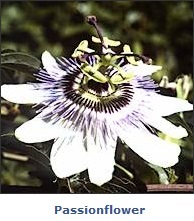 |
| The passionflower, a close relative of the violets, is a woody-stemmed climbing plant that grows to a height of 10 m (30 ft). Passionflowers are cultivated for their unique flowers and edible fruits. |
Passionflower, common name for a flowering plant family, and especially for members of its principal genus. The flowers are usually perfect, generally having a five-parted calyx and five-parted corolla. All species have a more or less conspicuous crown of filaments springing from the throat of the tube formed by the base of the calyx and corolla. The family contains about 530 species, most of which are climbing plants, such as the passion vine of the southern United States, which sometimes reaches a height of 9 m (30 ft). The bell apple, or water lemon, of the West Indies is a species of passionflower with an edible fruit. The giant granadilla is a closely related plant native to Jamaica and South America. The pulp, or aril, surrounding each seed of the giant granadilla plant is used in flavoring drinks and ices.
Scientific classification: Passionflowers make up the family Passifloraceae. The principal genus is Passiflora. The passion vine is classified as Passiflora incarnata, the bell apple, or water lemon, as Passiflora laurifolia, and the giant granadilla as Passiflora quadrangularis.
Indigo Plant

Indigo Plant, common name for any of a genus of shrubs or perennial herbs (see Legume). The genus has about 700 species, most native to tropical regions. Indigo plants have compound leaves and bear purple, pink, or white flowers. Their fruit consists of pods. Various Asian species contain the glycoside indican, which can be oxidized to produce the dyestuff indigo. Of a long-lasting, deep-blue color, indigo was an important Indian, Egyptian, and Roman dye during antiquity. It was first introduced into Europe during the 16th century. Most indigo dye today is synthetically manufactured.
Scientific classification: Indigo plants constitute the genus Indigofera, of the family Papilionoideae.
Foxglove Plant
Foxglove Plant

The common foxglove is grown for decorative and medicinal purposes. The flowers contain glycosides (chemicals that affect heartbeat and pulse), which can be extracted from the leaves and used to regulate and strengthen a person’s heartbeat. However, if plant materials containing glycosides are directly consumed by humans, nausea, abdominal pain, diarrhea, and heartbeat and pulse abnormalities can result. If consumed in large enough quantities, glycosides can cause convulsions and death.
Subscribe to:
Posts (Atom)
Popular Posts
-
 Plant Cell Plant cells contain a variety of membrane-bound structures called organelles. These include a nucleus that carries genetic...
 -
 All flowers share several basic features. Sepals, protective coverings that are closed over the bud before it blooms, are the outermost flow...
 -
Archaea or Archaebacteria, common name for a group of one-celled organisms, many of which do not require oxygen or sunlight to live. Before ...
-
 Insectivorous Plants, also carnivorous plants, plants that gain some of their nutrition from animals, especially insects, captured by the pl...
 -
Algae, diverse group of simple, plantlike organisms. Like plants, most algae use the energy of sunlight to make their own food, a proces...
